
Why Appliances Are Tricky to Move in a Truck
Refrigerators, washers, and dryers share three properties that make them dangerous cargo: they’re heavy (150-350 pounds), top-heavy (the compressor and motor weight concentrates high), and they have smooth surfaces that offer almost zero friction against a truck bed liner. Add highway vibration and a few lane changes, and an unsecured fridge becomes a 300-pound projectile.
The stakes are higher than with most cargo. A tipped refrigerator can rupture its sealed cooling system, turning a $1,500 appliance into scrap. A washer that slides into the tailgate can punch through it. And if anything leaves your truck bed on the highway, you’re liable for every vehicle it hits.
Equipment You Need
| Item | Spec | Quantity | Purpose |
|---|---|---|---|
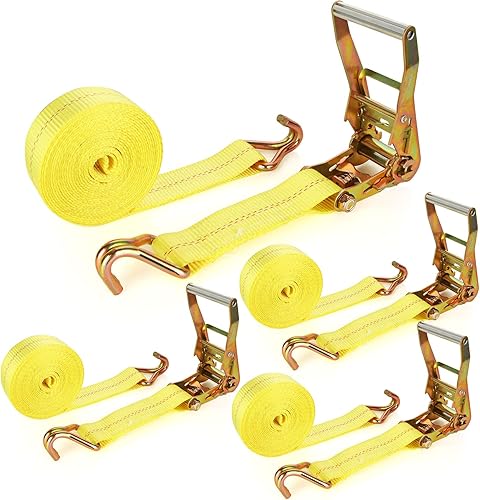
| Ratchet straps | 1.5″ or 2″ wide, 1,500+ lb WLL | 2-4 | Primary securement — over the top and/or around the appliance |
| Moving blankets | 72″ x 80″ padded blankets | 2-3 | Protect appliance finish and increase friction |
| Rubber-backed mat or anti-slip pad | Truck bed size | 1 | Prevents sliding on bare metal or plastic bed liner |
| Appliance dolly | 600+ lb capacity, stair-climbing wheels | 1 | Loading and unloading — don’t try to muscle it |
| Furniture pads or cardboard | Large sheets | As needed | Extra padding between appliance and truck bed walls |
Loading: Getting the Appliance Into the Truck
Use a Loading Ramp or Lift Gate
If you have access to a loading ramp (even a pair of 2×10 planks), use it. Rolling a 300-pound fridge up a ramp on a dolly is dramatically safer than trying to dead-lift it over a tailgate. If you’re renting a truck, request one with a lift gate.
The Two-Person Tailgate Lift
If you must lift over the tailgate: one person in the truck bed, one on the ground. Tilt the appliance back on the dolly, ground person lifts the base to tailgate height, truck person pulls from the top while ground person pushes from below. Keep your back straight, lift with your legs, and communicate every move before you make it.
Refrigerator Orientation
Always transport a refrigerator upright. Laying a fridge on its side can cause compressor oil to flow into the cooling lines, which leads to compressor failure when you plug it back in. If you absolutely must lay it down (vehicle height constraint), lay it on the side opposite the compressor (usually the side without the process tube), and wait 24 hours before plugging it in at the destination.
Securing Step-by-Step
Step 1: Position Against the Cab
Slide the appliance to the front of the truck bed, flat against the cab wall. This is the most stable position because the cab wall acts as a forward restraint during braking — the highest-force event in normal driving. Center the appliance left-to-right.
Important: Place a moving blanket between the appliance and the cab wall to prevent scratching both surfaces.
Step 2: Create a Non-Slip Base
Lay a rubber-backed mat or anti-slip pad under the appliance. This single step can double your friction coefficient — from about 0.2 (metal on plastic liner) to 0.5+ (rubber on plastic). It’s the cheapest, easiest upgrade to your tie-down security.
Step 3: Strap Over the Top
Run at least one ratchet strap over the top of the appliance and down to the truck’s tie-down anchors (bed hooks or stake pockets). Route the strap so it crosses the appliance at roughly the center of gravity — for a fridge, that’s about 60% of the way up from the base.
Tighten firmly but not enough to dent the appliance panels. If you see the metal flexing inward under the strap, you’ve gone too far.
Step 4: Prevent Side-to-Side Movement
Add a second strap running in the opposite diagonal, or use the truck’s side tie-down points to create X-pattern straps. If the appliance is centered against the cab, you can also wedge moving blankets or furniture pads between the appliance sides and the truck bed walls to fill the gap.
Step 5: Secure the Doors
Tape or strap the refrigerator/washer doors shut. An appliance door that swings open during transport can catch wind, shift the center of gravity, and bend the door hinges beyond repair. Use painter’s tape (won’t damage finish) or a bungee cord around the entire unit.
Specific Appliance Tips
Refrigerators
- Remove all shelves, drawers, and loose parts — pack them separately
- Defrost 24 hours before moving to avoid water leaks in transit
- Unplug and clean the drip pan
- Tape the power cord to the back so it doesn’t drag or snag
- Keep upright — if tilted more than 45 degrees, wait 24 hours before powering on
Washing Machines
- Install shipping bolts if you still have them — these lock the drum in place and prevent internal damage from road vibration
- If no shipping bolts available, stuff towels or blankets inside the drum to dampen movement
- Disconnect and drain all hoses
- Tape the lid/door shut
Dryers
- Remove the lint trap and clean the vent duct
- Dryers are lighter than washers and more prone to tipping — strap securely
- For gas dryers, cap the gas line connection point
Dishwashers
- Run an empty cycle before disconnecting to drain all water
- Lay flat (door facing up) if needed — dishwashers handle horizontal transport fine
- Protect the front panel, which scratches easily
What NOT to Do
| Bad Practice | Risk | Do This Instead |
|---|---|---|
| Laying fridge on its back | Compressor oil enters cooling lines, potential compressor failure | Transport upright or on the correct side |
| Using only bungee cords | Stretch under load, no positive lock — appliance slides and tips | Ratchet straps with at least 1,500 lb WLL |
| No padding under the appliance | Slides on smooth bed liner at first hard brake | Rubber mat + moving blanket base layer |
| Strapping to tailgate only | Tailgate isn’t strong enough — strap pulls it open under load | Use factory bed tie-down hooks or stake pockets |
| Driving at full highway speed | Higher forces, more vibration, less reaction time if something shifts | Keep speed under 55 mph, take corners slowly |
Frequently Asked Questions
Can I transport a refrigerator on its side?
It’s not recommended, but sometimes unavoidable (short truck bed, low clearance). If you must: lay it on the side opposite the compressor, keep the trip short, and wait at least 24 hours before plugging it in. This gives compressor oil time to drain back to the sump. Modern fridges with linear compressors are more tolerant, but the 24-hour rule still applies.
How many straps do I need for a refrigerator?
Minimum two: one over the top and one around the middle. For a full-size fridge (250+ pounds) in a truck without a cap, use three or four straps — two over the top in an X-pattern and one or two around the body. The DOT requires one tie-down per 500 pounds for commercial loads, but residential moves aren’t regulated the same way. More straps = more peace of mind.
Can I move a fridge in an SUV or minivan?
Only compact/mini fridges (under 4.5 cubic feet). Full-size refrigerators won’t fit through SUV cargo doors, and even if they did, laying them flat inside causes the compressor oil problem. Use a pickup truck, trailer, or rent a cargo van with a tall cargo area.
Do I need to strap down a washer/dryer if it’s wedged between other furniture?
Yes. Surrounding furniture isn’t a substitute for straps. Other items can shift, creating a chain reaction. Each heavy appliance needs its own dedicated straps anchored to the truck’s tie-down points.
What if my truck doesn’t have tie-down hooks?
Most trucks have stake pockets along the bed rails — use stake pocket tie-down anchors (about $20 for a set of 4). You can also install aftermarket bed hooks or use a ratchet strap bar that spans the bed width. Never loop straps around the tailgate hinges — they aren’t designed for lateral load.
Related Articles
- How Many Ratchet Straps Do I Need?
- What Size Ratchet Strap Do I Need?
- How to Tie Down Lumber on a Trailer
⭐ Recommended Products

As an Amazon Associate, CargoRigging.com earns from qualifying purchases.