
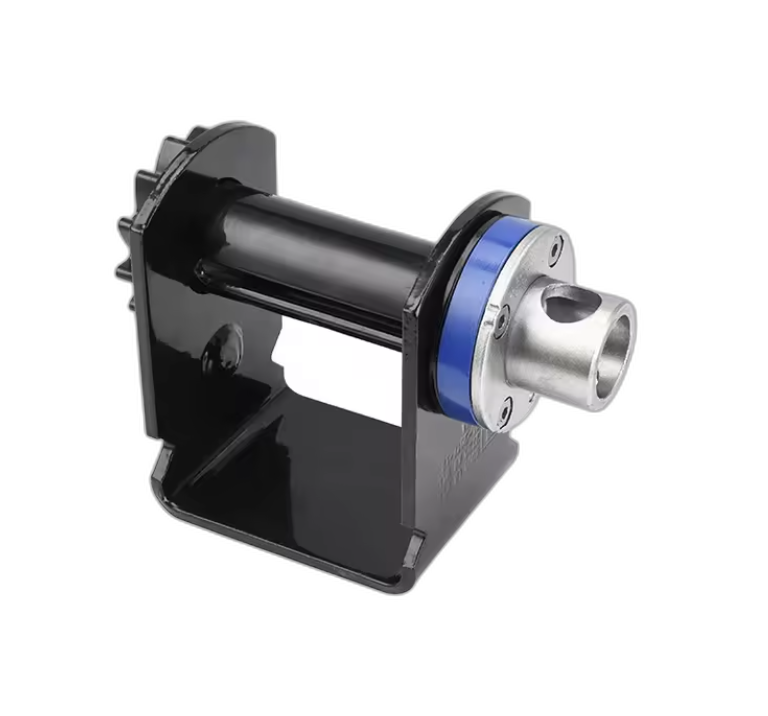
Hydraulic truck winches are built for commercial duty — tow trucks, service trucks, utility trucks, and military vehicles. Unlike electric winches, they run off the truck’s hydraulic system for continuous-duty pulling without overheating. We compared 4 major brands in the 12,000 lb class.
Head-to-Head: 12,000 lb Hydraulic Truck Winches
| Feature | Mile Marker HI12000 | Ramsey H246 | Pierce PW12000 | Tulsa Winch RN12W |
|---|---|---|---|---|
| Rating | ⭐ 4.6/5 | ⭐ 4.7/5 | ⭐ 4.5/5 | ⭐ 4.8/5 |
| Line Pull | 12,000 lbs | 12,000 lbs | 12,000 lbs | 12,000 lbs |
| Duty Cycle | Continuous | Continuous | Continuous | Continuous |
| Motor | Hydraulic, 6.8 GPM | Hydraulic, 8 GPM | Hydraulic, 7 GPM | Hydraulic, 8 GPM |
| Rope | 3/8″ × 100ft steel | 3/8″ × 100ft steel | 3/8″ × 100ft steel | 3/8″ × 100ft steel |
| Gear | Planetary | Worm gear | Planetary | Worm gear |
| Line Speed | 25 ft/min | 20 ft/min | 22 ft/min | 18 ft/min |
| Weight | 85 lbs | 110 lbs | 90 lbs | 120 lbs |
| Brake | Dynamic + automatic | Worm gear self-locking | Dynamic + automatic | Worm gear self-locking |
| Price | $1,800–$2,500 | $2,200–$3,000 | $1,500–$2,200 | $3,000–$4,500 |
| Origin | ?? USA (FL) | ?? USA (Tulsa, OK) | ?? USA | ?? USA (Tulsa, OK) |
| Warranty | 2-year | 1-year | 1-year | 1-year |
Brand Reviews
Tulsa Winch RN12W — The Commercial Standard
⭐ 4.8/5 | Tulsa Winch (Tulsa, Oklahoma) is the name in commercial hydraulic winches. Their worm gear design is inherently self-locking — the load holds without any brake mechanism, which means zero brake maintenance. The RN series has been the tow truck industry standard for decades. Heavy, expensive, and worth every pound and penny.
Pros: • Self-locking worm gear (no brake wear) • True continuous duty • Tow truck industry standard • Built like a tank • 30+ year service life common
Cons: • Most expensive • Heaviest (120 lbs) • Slowest line speed • Worm gear less efficient than planetary
What operators say: “We have Tulsa winches on trucks with 500,000+ miles. Still pulling. We’ve replaced everything else on the truck twice.” — Towing company owner, Texas
Ramsey H246 — Oklahoma Quality
⭐ 4.7/5 | Also from Tulsa, Oklahoma, Ramsey Winch has been building winches since 1943. The H246 uses a worm gear like Tulsa Winch but at a lower price point. Popular with utility companies and government fleets. Known for field serviceability.
Pros: • Self-locking worm gear • Military/government contracts • Easy field service • Oklahoma heritage
Cons: • Heavy (110 lbs) • Slow line speed • 1-year warranty
Mile Marker HI12000 — Lightest & Fastest
⭐ 4.6/5 | Mile Marker (Florida) uses a planetary gear system instead of worm gear — lighter, faster, and more efficient. The tradeoff: you need a reliable brake system because planetary gears aren’t self-locking. The HI12000 is the lightest winch here at 85 lbs, with the fastest line speed at 25 ft/min.
Pros: • Lightest (85 lbs) • Fastest line speed • Best efficiency • 2-year warranty (best in comparison)
Cons: • Planetary gear requires brake maintenance • Not self-locking • Less proven in extreme commercial duty
Pierce PW12000 — Budget Commercial
⭐ 4.5/5 | Pierce offers the most affordable hydraulic winch in this comparison. Planetary gear design, adequate for service trucks and light commercial use. Good entry point for operators who need hydraulic power but can’t justify Tulsa/Ramsey pricing.
Pros: • Most affordable • Light weight • Good for light commercial
Cons: • Less proven than Tulsa/Ramsey • Brake mechanism needs attention • 1-year warranty
Hydraulic vs Electric Winch
Choose hydraulic when: Continuous duty required, commercial towing, vehicle already has hydraulic system, extreme conditions, 10,000+ lb pulls regularly.
Choose electric when: Occasional use, no existing hydraulic system, off-road recovery, budget is limited, easy DIY install preferred.
Key advantage: Hydraulic winches never overheat. Electric winches have duty cycle limits — typically 2-3 heavy pulls before needing cool-down.
Recommendation
Tow trucks: Tulsa Winch — the industry standard, self-locking, outlasts everything. Utility/government: Ramsey — proven, serviceable, government-spec’d. Speed/weight priority: Mile Marker — lightest and fastest. Budget: Pierce — adequate for light commercial.
Ratings from towing industry surveys and fleet operator data. CargoRigging.com is an independent directory.
Looking for trusted suppliers?
Frequently Asked Questions
What is the advantage of a hydraulic truck winch over an electric one?
Hydraulic truck winches offer unlimited duty cycle — they can pull continuously for hours without overheating because the vehicle’s power steering pump provides constant hydraulic flow with engine-driven cooling. Electric winches overheat after 5-7 minutes of continuous full-load pulling. Hydraulic winches also deliver consistent pulling power regardless of battery charge. The trade-off is complex installation (hydraulic lines, pump, reservoir) and higher cost (typically 2-3x more than electric equivalents).
Can I install a hydraulic winch on any truck?
Any truck with a power steering pump can potentially run a hydraulic winch, but the pump must have sufficient flow capacity. Most factory power steering pumps provide 2-4 GPM, which is adequate for winches up to 12,000 lbs. For larger winches (15,000+ lbs), you may need an upgraded pump, a dedicated hydraulic pump driven by the engine, or a PTO-driven pump. Some trucks with electric power steering (common in newer models) have no hydraulic pump at all and require a standalone hydraulic power unit.
What maintenance does a hydraulic truck winch need?
Check hydraulic fluid level monthly and top up with the manufacturer’s recommended fluid (typically ATF or AW46 hydraulic oil). Inspect all hose connections for leaks before and after each use. Replace hydraulic hoses every 5-7 years or immediately if you see cracking, bulging, or weeping. Grease the drum bearings and fairlead rollers every 100 operating hours. Inspect the wire rope for broken wires and proper spooling. Flush and replace the hydraulic fluid every 2 years or 500 operating hours.
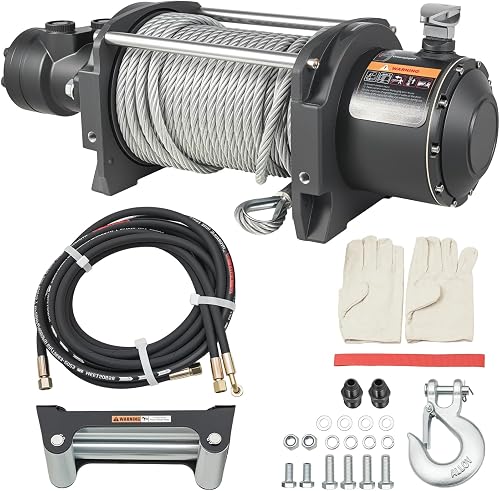
Products Featured in This Review

As an Amazon Associate, CargoRigging.com earns from qualifying purchases.