
Transport chain (Grade 70) is the DOT-required chain for securing loads on flatbed trailers. It’s stronger and lighter than general-purpose chain. We compared 3 grades and brands to help you choose the right chain for your application.
Grade Comparison: 3/8″ Transport Chain
| Feature | Peerless Grade 70 | Import Grade 70 | Grade 43 (High Test) | Grade 30 (Proof Coil) |
|---|---|---|---|---|
| Rating | ⭐ 4.8/5 | ⭐ 4.3/5 | ⭐ 4.4/5 | ⭐ 4.0/5 |
| WLL (3/8″) | 6,600 lbs | 6,600 lbs | 5,400 lbs | 2,650 lbs |
| Break Strength | 19,800 lbs | 19,800 lbs | 16,200 lbs | 10,600 lbs |
| Material | Carbon alloy steel, heat treated | Carbon alloy steel, heat treated | Carbon steel | Low carbon steel |
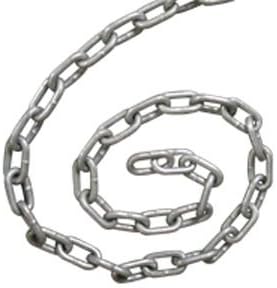
| Finish | Gold chromate (yellow-zinc) | Gold chromate | Zinc plated (silver) | Zinc plated (silver) |
| DOT Compliant | • Yes (required for flatbed) | • Yes | • Not for cargo securement | • No |
| Weight (per ft) | 1.36 lbs | 1.36 lbs | 1.36 lbs | 1.36 lbs |
| Price (per ft) | $4.50–$6.00 | $2.50–$3.50 | $2.00–$3.00 | $1.50–$2.50 |
| Origin | ?? USA (Winona, MN) | ?? China / ?? India | ?? / ?? Various | ?? / ?? Various |
| Traceability | Heat lot + test cert | Batch certificate | Batch certificate | Minimal |
Detailed Review
Peerless Grade 70 — The American Standard
⭐ 4.8/5 | Peerless (now Kito Crosby, Winona, Minnesota) has been making chain in America since 1917. Their Grade 70 transport chain is the benchmark — consistent heat treatment, precise link dimensions, and full heat-lot traceability. The gold chromate finish is the visual standard that DOT inspectors look for.
Pros: • Best quality control • Full traceability • Consistent link dimensions (critical for binder fit) • Gold finish recognized by inspectors • Matched with Peerless binders
Cons: • Nearly 2× the price of imports • Harder to find in small quantities
What flatbed drivers say: “I bought import chain once. The links were inconsistent — my Peerless binders didn’t fit right. Never again. American chain, American binders.”
Import Grade 70 — Budget DOT-Compliant
⭐ 4.3/5 | Chinese and Indian Grade 70 chain meets DOT specifications on paper, and many brands are legitimately tested and certified. The concern is consistency — link dimensions can vary enough to cause binder fit issues, and heat treatment uniformity is harder to verify.
Pros: • Half the price of Peerless • DOT compliant • Good enough for many operations
Cons: • Link dimension inconsistency • Binder fit issues reported • Harder to verify heat treatment • Batch (not heat-lot) traceability
Grade 43 (High Test) — NOT for Cargo Securement
⭐ 4.4/5 | Grade 43 is often confused with Grade 70 because they look similar when new. DO NOT use Grade 43 for DOT-regulated cargo securement. It’s designed for towing, logging, and utility applications. The silver zinc finish (vs Grade 70’s gold) is the visual identifier.
Appropriate uses: Towing, logging, agricultural, anchor chain for small boats.
Critical: Know Your Chain Grades
Grade 70 (Gold): Transport chain. DOT-required for cargo securement. Heat-treated alloy steel.
Grade 80 (Blue/Black): Alloy chain for overhead lifting. Higher strength. Used with chain slings.
Grade 100 (Purple): Premium alloy chain. 25% stronger than Grade 80. Used for compact chain slings.
Grade 43 (Silver): High-test chain. NOT for cargo securement or overhead lifting. Towing and utility only.
Grade 30 (Silver): Proof coil. Lowest strength. Barriers, tie-outs, non-load-bearing only.
Never substitute grades. A Grade 43 chain used in place of Grade 70 can fail under legal cargo loads.
Recommendation
Professional flatbed: Peerless Grade 70 — matched with Peerless binders for guaranteed fit. Budget flatbed: Import Grade 70 from a reputable supplier — verify test certificates. Towing: Grade 43 — purpose-built and cheaper. Never: Grade 30 or 43 for cargo securement.
Ratings from flatbed trucker forums and chain distributor data. CargoRigging.com is an independent directory.
Looking for trusted suppliers?
Frequently Asked Questions
What grade of tow chain should I use for vehicle towing?
Grade 70 (Transport Chain) is the correct grade for cargo securement and vehicle towing on public roads. It has a distinctive gold chromate finish and is the only chain grade that meets FMCSA/DOT requirements for cargo securement. Grade 43 (High Test) is acceptable for lighter towing applications but has a lower WLL per size. Never use Grade 30 (Proof Coil) for towing — it is designed for static applications like barriers and has inadequate strength for dynamic towing loads.
Can I use a tow chain as a recovery chain for stuck vehicles?
Standard tow chains (Grade 70) are not designed for dynamic snatch recovery — the sudden shock load can exceed the chain’s capacity and cause brittle fracture. Chains do not stretch to absorb energy like kinetic recovery straps. For vehicle recovery, use a kinetic recovery strap or a Grade 80/100 chain rated for the application. If you must use chain for a stuck vehicle, pull slowly and steadily (no jerking) and ensure the chain is rated for at least 3x the vehicle weight.
How should I inspect a tow chain before each use?
Check every link for: cracks (flex the chain and look for separation lines), elongation (compare a 10-link section to a new chain of the same size — more than 5% stretch means retirement), wear (measure link diameter — retire at 10% reduction), and nicks or gouges (stress concentrators that can initiate fracture). Inspect the grab hooks for proper latch operation and any deformation of the hook throat. Check that grade markings (70, 43, etc.) are legible on the links. Reject any chain with weld repairs.
Products Featured in This Review
As an Amazon Associate, CargoRigging.com earns from qualifying purchases.