
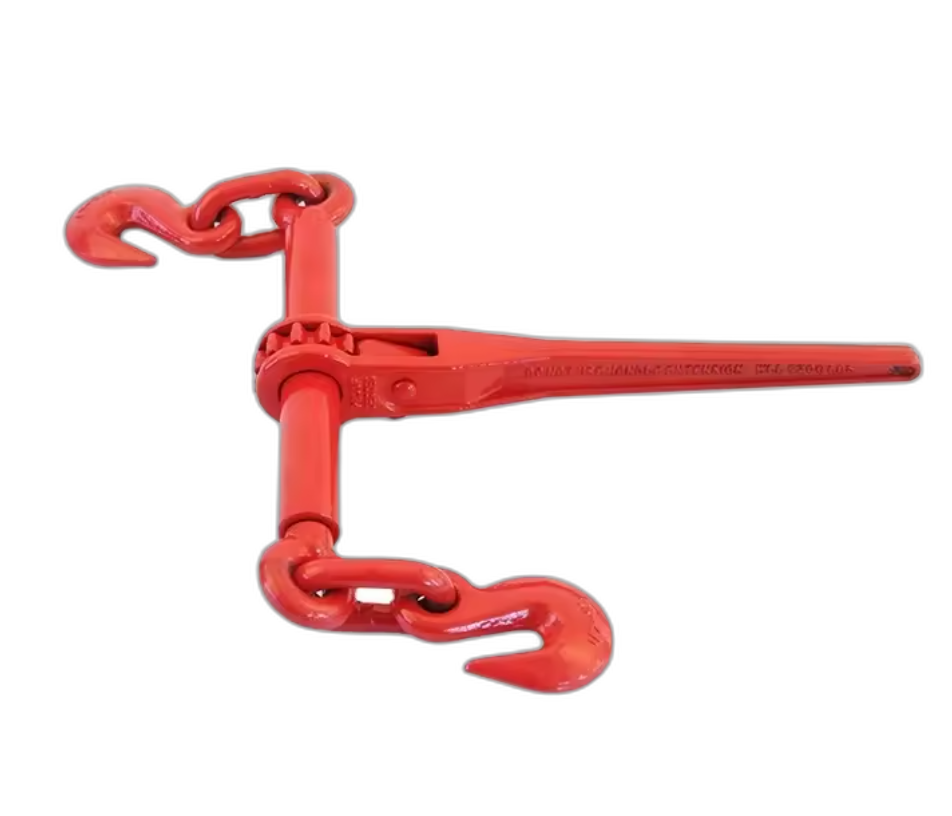
Load binders (chain binders) are used to tighten transport chains over cargo on flatbed trailers. There are two types: ratchet binders (safer, easier) and lever binders (faster, riskier). We compared 4 major brands in the 3/8″–1/2″ chain class.
Quick Verdict
Best Overall: Peerless — the undisputed chain and binder leader.
Best Ratchet Binder: Kinedyne — smoothest ratchet action in the market.
Best Budget: Zephyr — adequate for occasional use at half the price.
Head-to-Head: Ratchet Binders (3/8″–1/2″ Chain)
| Feature | Peerless | Kinedyne | Ancra | Zephyr |
|---|---|---|---|---|
| Rating | ⭐ 4.8/5 | ⭐ 4.7/5 | ⭐ 4.6/5 | ⭐ 4.2/5 |
| WLL | 9,200 lbs | 9,200 lbs | 9,200 lbs | 9,200 lbs |
| Chain Size | 3/8″ – 1/2″ | 3/8″ – 1/2″ | 3/8″ – 1/2″ | 3/8″ – 1/2″ |
| Handle | Ergonomic, powder-coated | Ergonomic, rubber grip | Standard, painted | Standard, painted |
| Weight | 9.5 lbs | 9.8 lbs | 9.2 lbs | 8.5 lbs |
| Price | $55–$75 | $50–$70 | $45–$65 | $25–$40 |
| Origin | ?? USA | ?? USA | ?? USA | ?? China |
| DOT / FMCSA | • Yes | • Yes | • Yes | • Yes |
Brand Reviews
Peerless — The Chain Authority
⭐ 4.8/5 | Peerless (now part of Kito Crosby) is the largest chain manufacturer in North America. Their binders are forged from the same alloy steel as their Grade 70 transport chain — a perfect match. The powder-coated handle is a small but appreciated detail that prevents rust and improves grip in wet conditions.
Pros: • Best material quality (same alloy as their chain) • Smoothest ratchet mechanism • Powder-coated handle • Individual test certificates available • Now part of Kito Crosby group
Cons: • Most expensive • Heavy
What drivers say: “Peerless binders and Peerless chain — the only combo I trust with steel coils. 80,000 lb loads, 300+ days a year.”
Kinedyne — Best Ratchet Action
⭐ 4.7/5 | Kinedyne’s ratchet binder has the smoothest action in this comparison. The rubber grip handle is comfortable even in cold weather. If you’re tightening 20+ binders per load, your hands will thank you.
Pros: • Smoothest ratchet action • Rubber grip handle • Excellent with Kinedyne chain • Widely stocked by trucking distributors
Cons: • Slightly heavier than Peerless • Rubber grip can wear after heavy use
Ancra — Fleet Standard
⭐ 4.6/5 | Reliable, well-priced, and widely available through fleet distributors. Ancra binders are often spec’d by fleet managers who buy in bulk.
Pros: • Good fleet pricing • Lighter than Peerless/Kinedyne • Consistent quality
Cons: • Standard handle (no rubber grip) • Ratchet action slightly rougher
Zephyr — Budget with Caveats
⭐ 4.2/5 | Chinese-made binders at half the price. They meet DOT specs on paper, but experienced drivers report faster wear on the ratchet mechanism and less precise forging. OK for occasional use; risky for daily heavy loads.
Pros: • Cheapest option by far • DOT compliant • Good for occasional use
Cons: • Ratchet teeth wear faster • Forging quality inconsistent • Paint chips quickly • Handle flex under heavy load
Ratchet vs Lever Binder
Ratchet binders (this article) are safer — controlled tightening, no snap-back risk, easier to operate. Required on many job sites.
Lever binders (snap binders) are faster but dangerous — the handle can snap back violently if the chain slips. Multiple fatalities have been reported from lever binder accidents. Many fleets have banned lever binders entirely.
Our recommendation: Use ratchet binders unless you have specific training and a reason to use lever binders.
Recommendation
Steel haulers: Peerless — matched with Peerless Grade 70 chain. General flatbed: Kinedyne — best ergonomics for daily use. Fleet buyers: Ancra — best bulk pricing. Weekend warriors: Zephyr — fine for occasional ATV or equipment transport.
Ratings from Amazon, trucker forums, and fleet operator surveys. CargoRigging.com is an independent directory.
Looking for trusted suppliers?
Frequently Asked Questions
What is the difference between a lever binder and a ratchet binder?
A lever binder uses a handle that snaps over-center to tension the chain in one pull — fast but requires significant physical strength and carries injury risk from handle snap-back. A ratchet binder uses a ratcheting mechanism for gradual, controlled tensioning — safer and easier to use but slower. OSHA does not mandate one type over the other, but many major carriers now require ratchet binders exclusively due to the lower injury rate.
How do I match a load binder to my transport chain?
Load binders must match the chain grade and size. A binder for Grade 70 chain is not interchangeable with Grade 80 or 100 — the hook geometry and WLL ratings differ. Check the binder’s grab range: a 3/8-to-1/2 inch binder works with both sizes in that range. The binder’s WLL must equal or exceed the chain’s WLL. For Grade 70 3/8-inch chain (6,600 lbs WLL), use a binder rated at 6,600 lbs or higher. Never mix binder grades with chain grades.
How tight should I set my load binders?
Tension the binder until the chain is taut with no visible sag, then apply enough additional tension to feel firm resistance. Over-tightening is a common mistake — it can damage the cargo, stretch the chain beyond its elastic limit, and make the binder extremely difficult (and dangerous) to release. The chain should ‘ring’ with a high pitch when struck — a dull thud indicates insufficient tension. Check binder tension at every stop for the first 50 miles and every 150 miles after.
Products Featured in This Review

As an Amazon Associate, CargoRigging.com earns from qualifying purchases.