
The Stakes Are Higher Than You Think
A 3,500-pound sedan rolling off a trailer at highway speed is not a fender-bender — it is a catastrophe. Every year, improperly secured vehicles cause thousands of road incidents in the United States alone. The Federal Motor Carrier Safety Administration (FMCSA) requires a minimum of four tie-downs for any vehicle transported on a flatbed, and each must have a working load limit (WLL) that meets specific thresholds.
Whether you are hauling a project car to a shop, moving a vehicle cross-country, or running an auto transport business, this guide covers every method, every strap placement, and every regulation you need to know.
Equipment Checklist
| Item | Specification | Quantity | Purpose |
|---|---|---|---|
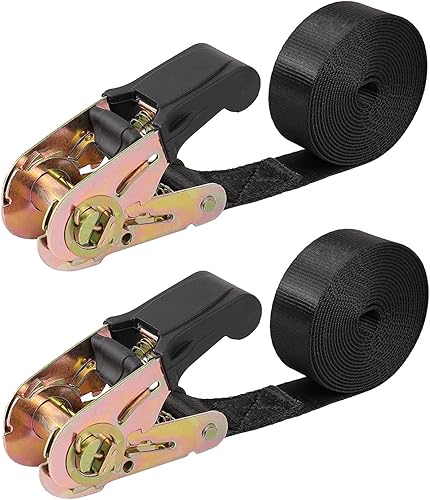
| Ratchet straps (over-the-wheel) | 2″ wide, 3,300 lb WLL minimum | 4 | Primary securement at each wheel |
| Tire nets or wheel baskets | Fits 13″–20″ wheels | 4 | Alternative to over-the-wheel straps |
| Axle straps | 2″ wide, 3,300 lb WLL | 2–4 | Backup or alternative anchor method |
| Protective sleeves or edge guards | Nylon or rubber | 4–8 | Prevent strap abrasion on sharp edges |
| Trailer with rated D-rings or stake pockets | 5,000 lb WLL per point minimum | 4+ | Anchor points on trailer deck |
What NOT to use: Bungee cords, rope, or ratchet straps hooked to suspension components, steering linkage, or brake lines. These will either fail under load or damage the vehicle.
Three Methods Compared
| Method | Best For | Pros | Cons |
|---|---|---|---|
| Over-the-wheel straps | Most cars, daily drivers | No contact with body, fast to apply | Can shift on alloy wheels |
| Tire nets / wheel baskets | Professional auto haulers | Most secure, DOT-preferred | More expensive, heavier |
| Axle straps | Project cars, short distance | Simple, cheap | Risk of axle damage if positioned wrong |
Method 1: Over-the-Wheel Ratchet Straps (Most Common)
Step 1: Position the Car
Drive or roll the car onto the trailer and center it. The front wheels should be straight, transmission in park (or in gear for manual), and parking brake engaged. For optimal weight distribution, position the car so roughly 60 percent of its weight sits over or ahead of the trailer axles.
Pro tip: Place the car slightly forward of center rather than dead center. This puts adequate tongue weight on the hitch and prevents trailer sway at highway speeds.
Step 2: Attach the Front Straps
Loop each strap over the top of the front tire so it cradles the tire tread. The ratchet mechanism should be on the outboard side (away from the car body) for easy access. Hook the ends to the trailer D-rings or stake pocket adapters positioned diagonally — one forward-outboard and one rearward-outboard of each front wheel.
Tighten the ratchet until the strap is snug against the tire. The tire should compress the suspension slightly — about half an inch. Do not over-tighten: excessive compression can damage suspension bushings and shock absorbers.
Step 3: Attach the Rear Straps
Repeat the same process for both rear wheels. Hook to D-rings positioned diagonally from each rear tire. The goal is to create an X-pattern of tension that prevents the car from moving forward, backward, or sideways.
Step 4: Check the Angles
Every strap should pull downward at roughly a 30–45 degree angle from the tire to the anchor point. Steeper angles (closer to vertical) provide more downward force but less horizontal restraint. Shallower angles provide more horizontal hold but less downward force. The sweet spot is 45 degrees — it gives you the best combination of both.
If your trailer anchor points force the straps into a nearly horizontal angle (less than 20 degrees), the car can bounce up and over the straps during rough roads. Add a second set of straps or use axle straps as supplemental tie-downs.
Step 5: Final Inspection
Walk around the car and check every strap by hand. Tug each one firmly. Then check these five things:
- Ratchet handles are closed and locked. An open handle can catch wind and vibrate loose.
- No strap is touching the car body, brake lines, or wiring. Vibration will saw through paint, rubber, and insulation.
- Excess strap is secured. Tuck or roll loose ends. Flapping straps degrade in UV and wind.
- Parking brake is set and transmission is in park. Straps are a backup, not the only thing holding the car.
- All trailer lights work. A loaded trailer with no lights is a citation waiting to happen.
Method 2: Tire Nets and Wheel Baskets
Tire nets (also called wheel nets or wheel baskets) are the gold standard for professional auto transport. They wrap around the entire tire and cradle it from all sides, making it nearly impossible for the wheel to shift.
How to Use Them
- Position the car on the trailer with wheels straight and parking brake on.
- Lay the net flat in front of each tire, then drape it over the top of the tire.
- Connect the net’s straps to the trailer D-rings on both sides of the wheel.
- Ratchet until snug. The net should grip the tire tread uniformly — no gaps, no bunching.
Why professionals prefer them: Tire nets distribute force across the entire tire surface instead of a single strap line. This eliminates the risk of the tire “popping out” from under a flat strap, which can happen with alloy wheels that have smooth faces.
Method 3: Axle Straps
Axle straps loop around the vehicle’s axle and connect directly to the trailer floor. They work, but they carry risks that the other methods avoid.
Where to attach: Wrap the strap around the axle tube itself — the thick steel shaft between the wheels. Never attach to CV axles, drive shafts, sway bar links, or any suspension arm. These components are designed for specific loads in specific directions and can crack, bend, or detach under tie-down forces.
When to use: Short-distance tows (under 50 miles), project cars with no tires, or as supplemental restraint with over-the-wheel straps.
When NOT to use: Long highway hauls, vehicles with independent rear suspension (most modern sedans), or any car you care about keeping in factory condition.
DOT and FMCSA Regulations
If you are a commercial carrier, FMCSA 49 CFR Part 393 Subpart I sets the rules:
- Minimum tie-downs: 4 per vehicle, regardless of weight.
- Aggregate WLL: The combined working load limit of all tie-downs must equal or exceed 50% of the vehicle’s weight.
- Blocked wheels: At least one set of wheels must be restrained from rolling (chocks, wheel nets, or over-the-wheel straps count).
- Inspection interval: Check and re-tighten within the first 50 miles, then every 150 miles or 3 hours of driving.
Even if you are not a commercial driver, these regulations represent the minimum safe standard. Follow them.
Enclosed vs. Open vs. Flatbed Trailers
| Trailer Type | Tie-Down Method | Notes |
|---|---|---|
| Flatbed (no sides) | Over-the-wheel or tire nets, 4+ straps | Most common for DIY haulers. Wind exposure makes secure tie-down critical. |
| Open with ramps (car hauler) | Over-the-wheel straps or tire nets | Built-in wheel stops help. Still need 4 straps minimum. |
| Enclosed trailer | Wheel chocks + E-track straps | Walls help, but don’t rely on them. The car must be strapped independently. |
Common Mistakes That Cause Cars to Come Loose
1. Hooking to the Frame Instead of the Wheels
Frame hooks work for disabled vehicles on a rollback tow truck. They do not work well on trailers because the hook-to-frame connection allows the car’s suspension to bounce freely. Every bump compresses and extends the suspension, gradually loosening the strap. Over-the-wheel methods eliminate this because the strap moves with the suspension.
2. Using Only Two Straps
Two straps hold the car in one axis. Hit a pothole or make a sharp lane change, and the car rotates around the two anchor points like a door on hinges. Four straps lock all axes.
3. Not Checking After 50 Miles
New straps stretch. Ratchets settle. Tires shift slightly. The first 50 miles are when most failures happen. Pull over, re-tighten everything, then continue.
4. Over-Tightening
If you ratchet the strap so tight that the suspension is fully compressed, you are putting constant stress on the straps, the suspension, and the trailer anchor points. One pothole can snap an over-stressed strap. Tighten until snug — half an inch of suspension compression is enough.
5. Letting Straps Touch the Car Body
A strap vibrating against a fender for 200 miles will sand through the clear coat, the paint, and into the metal. Always route straps away from body panels. Use edge guards where contact is unavoidable.
Special Situations
Lowered Cars
Low-clearance vehicles may not have enough suspension travel for over-the-wheel straps to compress. Use tire nets instead, or use axle straps as supplemental hold-downs. Consider a trailer with a tilt deck or low-angle ramps for loading.
All-Wheel Drive (AWD) Vehicles
AWD vehicles can be hauled on a trailer with all four wheels on the deck — no special requirements beyond normal tie-down. The drivetrain concern only applies to flat-towing (all four wheels on the road), which is a different situation entirely.
Electric Vehicles
EVs are heavier than equivalent gas cars, often by 500–1,000 pounds. Make sure your trailer’s GVWR and your tow vehicle’s towing capacity can handle the extra weight. Use straps with higher WLL ratings. Standard tie-down methods work — just size up your equipment.
Classic and Show Cars
For high-value vehicles, use tire nets with soft rubber liners. Add protective blankets between the tire net hardware and the wheel face. Avoid any tie-down method that contacts the body, bumpers, or trim. Enclosed trailers with E-track systems are the safest option.
Pre-Trip and During-Trip Checklist
| When | What to Check |
|---|---|
| Before departure | All 4 straps tight, ratchets locked, excess tucked, parking brake on, lights working |
| After 50 miles | Re-tighten all straps, check for rubbing or shifted positions |
| Every 150 miles / 3 hours | Re-check tension, inspect for fraying or heat damage |
| After rough roads | Immediate stop and full re-inspection |
| At destination | Release straps slowly (stored energy can snap back), remove in reverse order of installation |
Related Articles
- What Size Ratchet Strap You Need
- Ratchet Strap Won’T Release
- Dot Cargo Securement Rules
- Flatbed Tie-Down Methods
Frequently Asked Questions
How many straps do I need to tie down a car on a trailer?
A minimum of four straps — one at each wheel. FMCSA regulations require four tie-downs for any vehicle regardless of weight. For added security on long hauls or heavy vehicles, consider adding a fifth or sixth strap through the axle or to frame-mounted tow hooks as supplemental restraints.
Can I use ratchet straps on alloy wheels without scratching them?
Over-the-wheel ratchet straps contact the tire tread, not the wheel face, so they generally do not scratch alloy wheels. However, if the strap shifts during transit, the metal ratchet or hook can contact the rim. Use protective sleeves on the strap near the wheel, or switch to tire nets which cradle the entire tire without hardware touching the rim.
What working load limit (WLL) do I need for car tie-down straps?
The combined WLL of all tie-downs must be at least 50% of the vehicle’s gross weight. For a typical 4,000 lb car with four straps, each strap needs at least 500 lb WLL to meet the minimum. In practice, use 2″ straps rated at 3,300 lb WLL each — this provides a significant safety margin and is the industry standard for vehicle transport.
Should I leave the car in park or neutral when strapped to a trailer?
Always leave the car in park (automatic) or in gear (manual) with the parking brake engaged. The transmission lock and parking brake act as primary resistance against rolling, while the straps provide secondary securement. Never rely solely on straps — they are designed to work together with the vehicle’s own braking system.
Is it legal to tie down a car with only two straps?
No. FMCSA 49 CFR Part 393.130 requires a minimum of four tie-downs for any vehicle being transported, regardless of its weight. Using only two straps is both illegal for commercial carriers and unsafe for anyone. Two straps leave the vehicle free to rotate and shift laterally.
How often should I check the straps during a long trip?
Check and re-tighten all straps within the first 50 miles of your trip. After that, inspect every 150 miles or every 3 hours of driving, whichever comes first. Also stop for an immediate check after driving over rough roads, through construction zones, or after any sudden braking or swerving event.
⭐ Recommended Products

As an Amazon Associate, CargoRigging.com earns from qualifying purchases.